
ADHD Productivity Tools: What Actually Works When Traditional Methods Fail (2026)
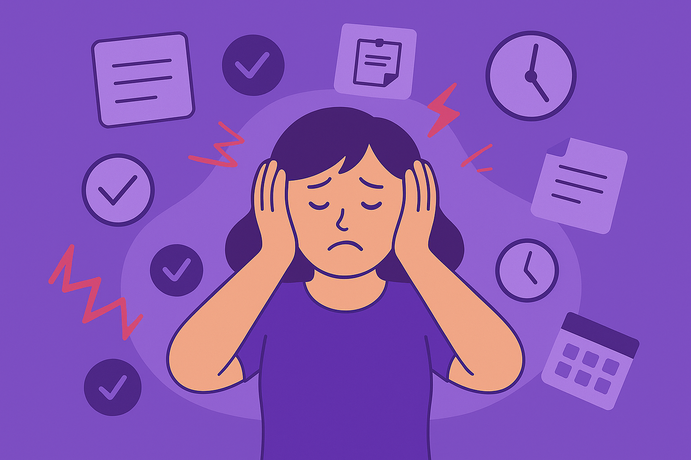
Many people are turning to ADHD apps because traditional productivity tools are built for neurotypical focus, memory, and motivation patterns. These tools assume you can simply “organise your tasks,” “set priorities,” and “stick to the plan,” but for many people with ADHD, they fail almost immediately. ADHD brains need support that works with fluctuating focus, working memory challenges, and task initiation difficulties. Research published in the Journal of Attention Disorders consistently highlights executive dysfunction as a core feature of ADHD in adults, not just a secondary symptom. In this article, we explore why mainstream tools fall short, what people with ADHD say they truly need, and how modern ADHD planners and ADHD productivity tools are redefining effective, neuroinclusive support.
The Problem With Traditional Productivity Systems and ADHD
Traditional to-do apps and productivity methods were created around predictable focus, consistent energy, and linear task execution. ADHD doesn’t operate this way.
People with ADHD often describe:
difficulty starting even small tasks
sudden bursts of hyperfocus followed by burnout
emotional dysregulation that disrupts routines
forgetting information seconds after hearing it
prioritisation paralysis
shame from repeating the same struggles
These realities make rigid systems — including popular mainstream productivity apps — ineffective.
1. Traditional Tools Assume You Can Start Tasks on Demand
For neurotypical users, writing down a task is enough to trigger action. For ADHD users, task initiation itself is the barrier.
Many people describe feeling physically unable to start tasks, even ones they care about. Traditional tools simply present a list and assume you can begin. But ADHD brains need activation cues, micro starts, and low friction entry points, something very few mainstream task apps offer.
This is where a specialised productivity app for ADHD performs better than generic task lists.
2. Traditional Planners Don’t Account for Fluctuating Energy & Attention
ADHD energy is not consistent from day to day, or even hour to hour. One day you’re hyperfocused for hours, the next you can’t begin a five minute task.
Yet traditional planners assume:
- equal energy every day
- predictable time blocks
- consistent follow through
This mismatch creates frustration and self blame.
In contrast, a good ADHD planner adapts to your energy state. It helps you adjust your expectations, reorder tasks, and stop overloading low energy days. Recallify’s system does exactly this by helping you prioritise based on your real mental bandwidth, not someone else’s ideal routine.
3. Standard Tools Don’t Help With Forgetfulness or Working Memory Load
ADHD isn’t just about distraction. It often includes working memory challenges.
People with ADHD describe:
- forgetting what they were about to do
- losing track mid task
- forgetting instructions
- missing appointments despite reminders
A generic to do list doesn’t solve working memory challenges.
A purpose built memory support app or ADHD productivity tool like Recallify helps externalise memory so nothing depends solely on your brain’s ability to hold information in the moment. Techniques like active recall and spaced repetition can also help strengthen retention over time.
4. Traditional Productivity Systems Create Shame Cycles
When mainstream tools fail, ADHD users often blame themselves, not the system.
Many describe feeling:
- ashamed for “not trying hard enough”
- guilty about unfinished tasks
- overwhelmed by long lists
- judged by tools that penalise missed deadlines
Tools that don’t consider ADHD needs unintentionally reinforce shame and anxiety, which in turn make executive dysfunction worse.
ADHD productivity tools avoid this by:
- encouraging resets
- celebrating small wins
- avoiding guilt based language
- offering compassionate nudges
- supporting emotional regulation
This emotional layer is crucial, and mostly absent in conventional task apps.
5. Traditional Tools Don’t Address Decision Paralysis
Most productivity tools require users to:
- choose what to do
- prioritise tasks
- decide next steps
For ADHD brains, this can lead straight to paralysis.
People often say:
“I know what needs to be done, I just freeze when choosing where to start.”
An effective ADHD productivity tool reduces choices rather than adds them. It offers the next best step, not a demanding list of decisions. Recallify’s AI powered task extraction helps do exactly this: it pulls tasks from your notes or recordings and helps you focus on what matters now.
6. Mainstream Apps Don’t Adapt to ADHD’s “All-or-Nothing” Focus Patterns
ADHD users often oscillate between:
- hyperfocus, where hours disappear
- mental paralysis, where nothing moves
Traditional apps treat focus as stable. ADHD productivity tools recognise this dynamic and help manage it with:
- session reminders
- break prompts
- gentle stop timers
- context aware nudges
A good ADHD productivity tool helps protect both your attention and your wellbeing, reducing the risk of burnout.
7. Generic Tools Don’t Integrate With Real-Life ADHD Habits
ADHD minds often rely on:
- voice notes
- screenshots
- scattered reminders
- scribbled ideas
- sudden bursts of creativity
Standard task apps aren’t built for this.
That’s why the best ADHD productivity tools integrate with real habits, turning recordings, notes, and photos into usable tasks without manual sorting.
Recallify’s automatic task extraction is designed precisely for this reality.
ADHD Productivity Tools That Actually Help
Not every app labelled “for ADHD” addresses these challenges. Many are standard task managers with a different colour scheme. The tools that genuinely help tend to fall into a few categories, and most people with ADHD benefit from combining two or three rather than searching for one perfect app.
Task Capture and Organisation
This is where most traditional tools fail hardest for ADHD. If you need to type a title, assign a category, set a priority, and pick a due date before saving a task, the task will be forgotten before you finish.
The most effective ADHD productivity tools in this category capture first and organise later. Voice input is particularly valuable because it removes the barrier of typing and structuring thoughts at the same time.
Recallify is built around this problem. You record a conversation, meeting, lecture, or thought, and the app identifies tasks automatically from the content. No manual entry, no categorisation, no friction. It also generates summaries and structured reminders so that follow through does not depend on your working memory alone.
Other tools in this category include Todoist (lightweight task lists with natural language input) and TickTick (task management with a built in Pomodoro timer). Both are solid for ADHD users who prefer typing over voice, though neither offers automatic task detection from recordings.
For a full comparison of ADHD task management apps, see our ADHD apps guide.
Focus and Attention Tools
These help with the “getting through it” phase: sustaining attention during a work session. They do not help with capture or organisation but pair well with tools that do.
Forest uses gamification to keep you off your phone. You plant a virtual tree that dies if you leave the app. The visual feedback loop is effective for ADHD brains that respond to immediate, tangible consequences.
Brain.fm provides audio engineered to support sustained attention. Some ADHD users find it helpful for creating a consistent sensory backdrop during work, reducing the need for external stimulation.
Neither tool manages tasks or information. They work best as a complement to a capture and organisation tool, not a replacement.
Planning and Scheduling
Calendar based tools help people with time blindness see their day and week as a visual structure. Morgen consolidates multiple calendars and offers time blocking with “Frames” (recurring templates for different types of work). Sunsama provides a guided daily planning ritual that surfaces tasks from connected apps.
Both are useful for ADHD users who struggle with time awareness but can feel overwhelming if the planning process itself is a barrier. If sitting down to plan your day is the problem, these tools may not be the right starting point.
Recallify’s task management takes a different approach: instead of requiring you to plan first, it captures tasks as they arise and lets you push them to your calendar with suggested times. Planning happens as a byproduct of capture rather than a separate activity.
Memory and Information Management
This is an overlooked category for ADHD. Notes, recordings, emails, and messages scatter across multiple apps, and the “where did I put that?” problem drains enormous mental energy.
Tools that consolidate information and make it searchable reduce this load. Recallify stores all your recordings, notes, and uploads in one place with AI powered search, so you can ask “what did I say about the dentist appointment?” rather than hunting through five different apps.
Active recall and spaced repetition techniques can also strengthen retention over time. Recallify generates personalised quizzes from your own content, applying these research backed methods automatically.
Habit and Routine Support
Apps like Finch (gamified self care) and Habitica (habit tracking with RPG mechanics) use reward systems to build consistency. These suit ADHD users who respond to visual progress, gentle accountability, and a sense of play.
They work best for building daily routines (morning habits, medication reminders, exercise) rather than managing work tasks or information.
Choosing the Right ADHD Productivity Tools
The NHS guidance on living with ADHD recommends external prompts and structured routines as part of managing daily life. If traditional productivity tools have not worked for you, the issue is almost certainly the tool, not you. The pattern most people describe, download, feel hopeful, use it for a week, miss a day, feel guilty, abandon it, is predictable when the tool does not account for inconsistent executive function.
The way forward is to start with your single biggest challenge. If your main problem is forgetting tasks, try a voice capture tool. If it is time blindness, try a visual scheduler. If it is information overload, try consolidating your notes into one searchable place. Avoid the temptation to overhaul everything at once.
For more on specific approaches, see our ADHD planner page, our guide to ADHD friendly reminders, or our ADHD apps comparison for detailed reviews of individual tools. Students in higher education can also read our guide to assistive technology and DSA funding.
For more background on how ADHD affects working memory, emotional regulation, and executive function, see the Mayo Clinic’s ADHD overview.
Note: This article is for informational purposes only. Recallify is designed as an everyday support tool and is not a medical device. It does not provide diagnosis or clinical decision support, and is intended to complement, not replace, professional medical care.
iOS App
Get Recallify from App Store today.

Android App
Get Recallify from Google Play today.

Frequently Asked Questions
What are the best ADHD productivity tools in 2026?
The best tools depend on your specific challenges. For task capture and automatic organisation, Recallify uses AI to extract tasks from recordings and notes without manual input. For focus sessions, Forest and Brain.fm offer gamified and audio based support. For time blocking and scheduling, Morgen and Sunsama help make time visible. Most people with ADHD benefit from combining two or three tools rather than relying on one. See our full ADHD apps comparison for detailed reviews.
Do ADHD productivity apps actually help?
Yes, if they are designed around executive function challenges rather than just presenting a standard task list. Research shows that external supports such as reminders, structured routines, and reduced decision loads can significantly improve daily functioning for adults with ADHD. The key is choosing tools that require minimal manual input and remain useful even when engagement is inconsistent.
What makes a productivity app ADHD friendly?
An ADHD friendly app minimises friction at every step. It captures information quickly (ideally by voice), organises automatically, sends timely reminders, and does not punish inconsistent use. It should reduce the number of decisions required rather than add to them. Generic task managers that require manual entry, categorisation, and daily review sessions tend to fail for ADHD because they demand the exact executive functions that ADHD disrupts.
How do I stop abandoning productivity apps after a week?
Choose a tool that demands as little from your executive function as possible. Automate what can be automated, reduce manual input, and accept that consistency will vary. Pick tools that still work when you come back after a gap. If an app makes you feel guilty for missing a day, it is not designed for ADHD.
Can AI help with ADHD productivity?
AI can be particularly useful for ADHD because it automates the organisational steps that require the most executive function. AI powered tools can transcribe speech, detect tasks from unstructured content, suggest priorities, and generate summaries, all without requiring manual effort. Recallify uses AI to turn voice recordings, notes, and uploaded documents into organised, searchable information with automatic task extraction and spaced repetition for memory support.
More on adhd
All articles
Education and study
Assistive Technology for ADHD Students

Education and study
Disabled Students Allowance for ADHD in England
ADHD
ADHD Friendly Reminders: What Works When You Keep Forgetting