


Cognitive support for memory, attention and everyday tasks

Resources

User stories

How people use Recallify at work, in study and at home, in their own words: people with ADHD, long Covid, a brain injury or a stroke, young people recovering from a brain tumour, a psychology student, and parents.

Quotes are from interviews and pilot feedback gathered by the Recallify team, and from app reviews, lightly edited for length.

Video stories

People who use Recallify on where it fits into a day, filmed on their own phones and in their own words.

In their own words

Reminders that arrive before the appointment, notes that write themselves, and a place to put a thought before it goes.

  • Recallify has helped me so much with everything to do with my ADHD and my memory. It is like my second brain. I can speak into it and it records the thoughts I can't action immediately. Especially helpful with details, dates and times. It has helped me sort my life out.

    EmmaRecallify user
  • It's much quicker than typing, and it works over the noise of the child playing.

    SuzannaRecallify user
  • I was at a conference, tapping all my notes into the app, and it produced such a helpful summary. I took a picture of some of the slides and it let me add my photos as a snapshot. I sent the summary over to my manager and he thought it was excellent.

    IanRecallify user
  • The most helpful bit is being able to just record myself. It takes less effort than having to sit and type things in. I used it this morning to set a reminder to ask mummy to change my screen protector, and I've used it to log all my Zooms.

    MollyRecallify user
  • My whole day is planned and organised before breakfast. This has changed my life from missed appointments and disappointments. It makes me want to do the tasks I would usually put off, and it's simply a weight off my mind. It's been very easy to use.

    GordonRecallify user
  • We were in the car going to physio and then, ping, it came up: physio appointment. If you have quite an active brain, it's a brilliant tool to just talk to your phone, and at the end of the day there's something coming out on the other side that helps you organise.

    YvetteParent of a Recallify user
  • Quality app! I've got encephalitis and started using this a short while ago. It really helps.

    GavinRecallify user
  • I liked the transcription feature and the AI-powered bullet points for action items. I was able to take notes of all the tasks without missing anything.

    MalavikaPsychology student
  • I wish this had existed when I was first recovering.

    TimRecallify user
  • For somebody with chronic illness or difficulty concentrating, it can be very useful to process your thoughts quickly and store them without having to write them down or type them out.

    WendyRecallify user
  • It's nicer for him that he's remembering it. That horrible feeling that you've forgotten something isn't there. That's the main thing he's been using it for, the reminders of the tasks.

    JaneParent of a Recallify user
  • I use it as a dumping ground and then filter out stuff.

    NishaRecallify user
  • I'm blown away by the AI summaries it generates on videos, documents and especially audio recordings.

    LisaRecallify user
  • You can have your own little brain on your phone.

    RichardRecallify user
  • I've had things given to us over the last five years and I haven't used them. This is the first one I've seen where I thought, I can use this, it makes sense.

    DarrenRecallify user

Case studies

Five people and the everyday situations Recallify helps with: meetings, training days, school meetings, medical appointments, planning meals and the working week.

Tara's story

In 2014 a car crash left Tara with a brain injury and in a coma for several months. She learned to walk and talk again, and now uses Recallify in meetings and for everyday reminders.
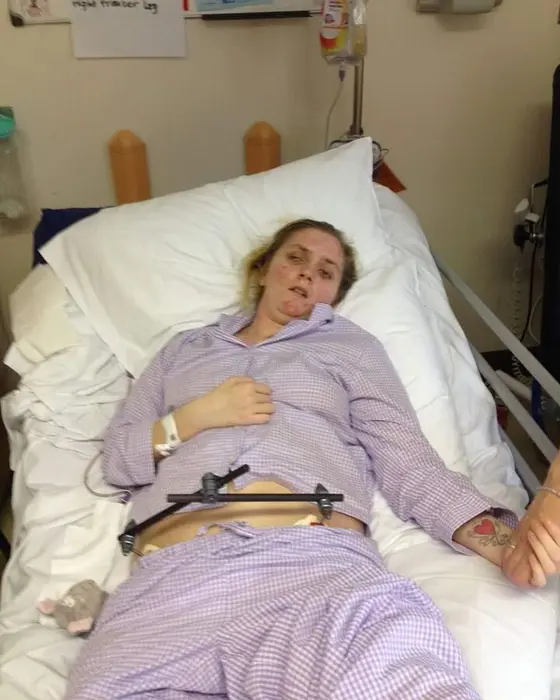
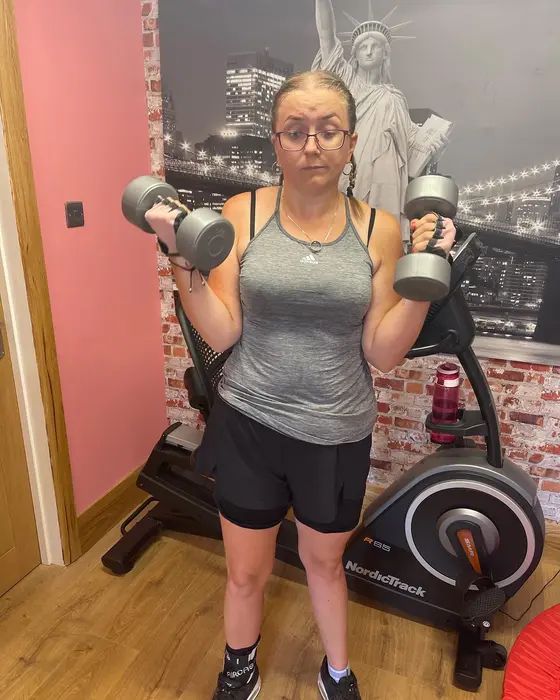
Tara lying in a hospital bed in a lilac gown, with a metal frame fixed across her pelvis
In hospital after the crash
Tara at home today, lifting a dumbbell in each hand in front of an exercise bike
Today

Instead of writing I could just record using the recording function in the app and replay it later on in the day.

On 9th February 2014, I was involved in a severe car accident near Braintree, Essex, when a speeding drink-driver collided with my vehicle.

It was quickly recognised that I was in a critical condition, and the Essex Air Ambulance worked alongside the emergency services to safely extricate me from the vehicle. A thorough head-to-toe assessment revealed life-threatening injuries to my head, chest and pelvis, including a severed aorta. I had to be anaesthetised and ventilated at the roadside. The medical team also decompressed both sides of my chest, administered concentrated fluids to help reduce brain swelling, and stabilised my pelvis with a splint to help control internal bleeding.

The Essex Air Ambulance responded promptly, providing me with life-saving treatment at the scene before airlifting me to Addenbrooke's Hospital. I remained in a coma for several months and subsequently underwent extensive rehabilitation. Despite the initial medical expectations, I have made significant progress in my recovery, learning to walk and talk again.

In the years following my accident, I have remained focused on my rehabilitation and have also become involved in fundraising efforts to support the organisations that played an important role in my recovery, particularly Headway.

I would say since my brain injury I have always tried to be organised because that's who I was before my accident. The problem was I couldn't write as fast as I used to. I would write things down then forget where I put them. In meetings I found that I couldn't write as fast as people were talking, so I found the recording app on Recallify really useful. Instead of writing I could just record using the recording function in the app and replay it later on in the day. I use the app the same way for little reminders too, such as for upcoming events and to remind me to take my medication.

Written by Tara

Megan's story

Megan is a medical editor living with the lasting effects of autoimmune encephalitis. She uses Recallify for day-to-day organisation, including saving recipes and planning meals.

Megan smiling at a restaurant table outdoors, wearing a burgundy top
Megan

Something that used to feel a burden became a lot more manageable.

My name is Megan. I’m a medical editor living in Tunbridge Wells, Kent. Nearly 10 years ago I was diagnosed with post-infectious autoimmune encephalitis (inflammation of the brain). In my case the inflammation followed an infection, when my immune system mistakenly attacked healthy brain tissue.

The lasting effects I live with are fatigue and neuropathic pain. My coordination can also be impaired when I’m stressed, unwell, or tired.

I spent over 6 weeks in hospital, and afterwards I had to relearn basic skills like walking and talking and build my strength back up. In the early days I was constantly overwhelmed. I struggled to communicate because I couldn’t find the right words, which brought a lot of anger and frustration. I had extreme fatigue and headaches, and double vision that made it impossible to look at a book or a screen.

When I was well enough to return to work, I found it overwhelming. I got tired quickly. Tasks that used to be routine took far more effort, and I had less capacity to get through the day.

For me it was a gradual realisation that one of the hardest thing to manage was other people’s understanding of my condition. A brain injury is often invisible. Because people couldn’t see it, they expected me to behave the way I always had, when that wasn't possible anymore.

Being that ill showed me who my real friends were, and I value that. But I was also struck by unexpected kindness from friends, neighbours, and colleagues. Moreover, I was just so happy to be alive, and so grateful to everyone in the NHS who cared for me.

One of the toughest things was impaired emotions, which really affected my confidence. When I was sad or in pain, I laughed, often hysterically; when I was happy, I cried. It came quite late in my recovery, around 8 months after the injury. It made work difficult, particularly when talking with clients who were unaware of my condition. Others sometimes found it awkward, or even funny, without realising the effect it was having on me. I was lucky to have incredibly supportive colleagues, and slowly it did improve.

I came across Recallify after being invited to test the app through my volunteering with the charity Encephalitis International. I found it really intuitive to use, and a great support throughout the day. I liked the different forms of input: you can record a voice message rather than type, or the other way round. It really helped with my day-to-day organisation, and it’s handy that it links to your calendar app.

When I’m overwhelmed or stressed, planning and cooking a healthy meal can feel like too much. Recallify lets you upload images, so I’ve saved screenshots of my favourite recipes. When I can’t think what to cook, I just ask the app, for example, “I fancy a salad, what recipes do I have?”, and it brings up the salad recipes I’ve saved. Then, when I’m out, I can ask what ingredients I need to buy. Something that used to feel a burden became a lot more manageable.

Written by Megan Lee

Tell us your story

Using Recallify at home, at work or in study? We would like to hear how it is going, and what to build next. Support services and universities can book a demo.

Scroll to Top
Recallify
Privacy Overview

This website uses cookies so that we can provide you with the best user experience possible. Cookie information is stored in your browser and performs functions such as recognising you when you return to our website and helping our team to understand which sections of the website you find most interesting and useful.