
What is Mild Cognitive Impairment (MCI)
If you or someone close to you has been told they have Mild Cognitive Impairment, you are probably looking for two things: a clear explanation of what MCI actually means, and practical advice for managing daily life. This page covers both.
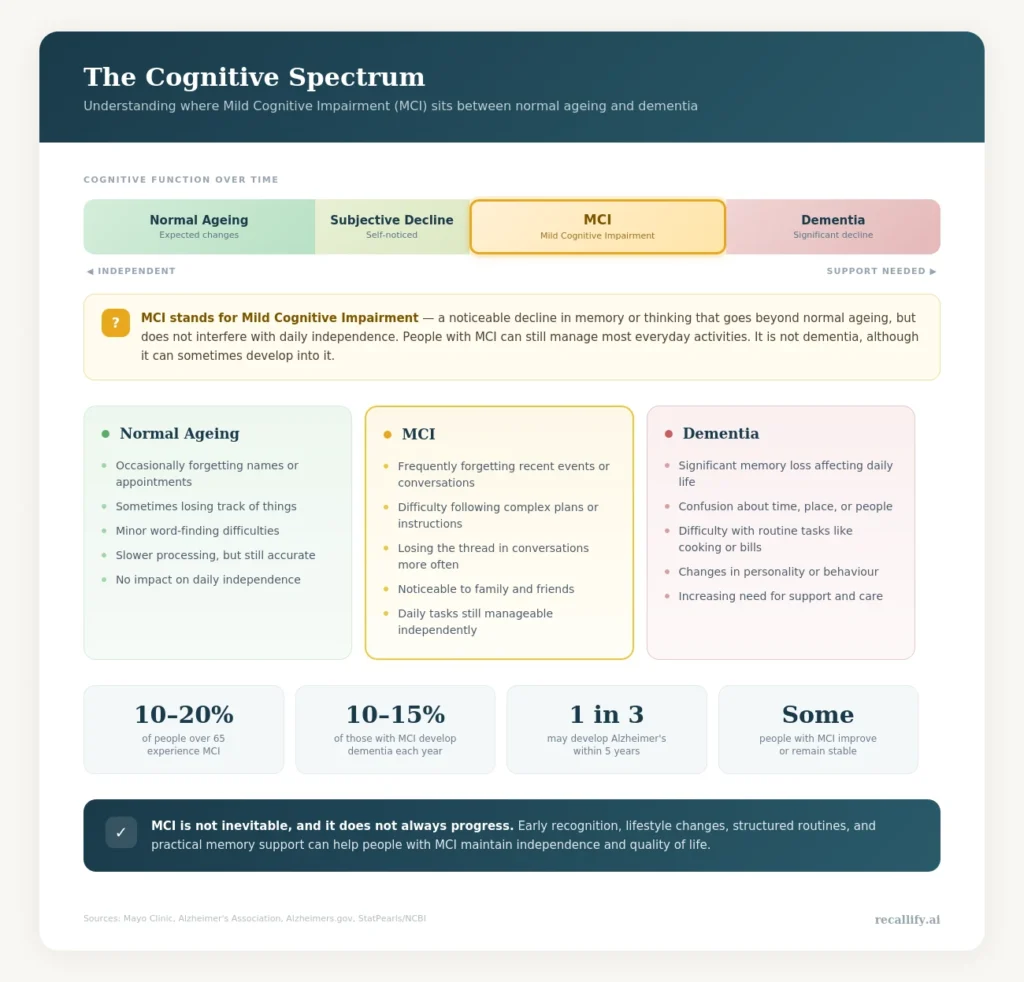
MCI stands for Mild Cognitive Impairment. It describes a noticeable decline in memory or thinking that goes beyond normal ageing but is not severe enough to be classified as dementia. People with MCI usually continue to manage daily life independently, though some tasks may take more effort or require new strategies. An MCI diagnosis is not a fixed outcome, and with the right support, many people maintain their abilities and quality of life for years.
Causes of MCI
While the precise cause of MCI remains elusive, several factors contribute to its development. When people search for MCI meaning or ask what is MCI, they are often trying to understand its root causes and risk factors.
Ageing is a primary risk factor. Estimates suggest that around 10% to 20% of individuals over 65 may experience MCI, with the risk increasing further with age. Genetics play a role too, particularly the APOE ε4 gene variant, which has been linked to a higher likelihood of progressing to Alzheimer’s disease.
Other medical conditions can also increase the risk, including diabetes, depression, stroke, and cardiovascular disease. In some cases, treatable conditions such as medication side effects, thyroid problems, vitamin B12 deficiency, sleep apnoea, or emotional distress can cause or worsen memory difficulties. This is one reason early medical assessment matters: some causes of cognitive decline and fatigue can be identified and addressed.
Types of MCI
MCI is not a single condition. Clinicians generally distinguish between two main types:
Amnestic MCI primarily affects memory. A person might repeatedly forget recent conversations, misplace items, or struggle to recall appointments. This type is the one most commonly associated with early Alzheimer’s disease, though not everyone with amnestic MCI goes on to develop dementia.
Non amnestic MCI affects other thinking skills while memory may remain relatively intact. This can include difficulties with planning, decision making, visual perception, or language. Non amnestic MCI may be linked to other conditions such as vascular disease or Lewy body pathology.
Understanding which type of MCI someone has can help clinicians assess the likely cause and guide decisions about monitoring and support.
Signs and Symptoms of MCI
Signs of MCI include increased forgetfulness, difficulty in organizing tasks, and challenges in finding words or phrases. These symptoms often prompt concern from family and friends.
Other common signs include:
- Frequently losing the thread of conversations, books, or films
- Feeling increasingly overwhelmed by decisions or planning
- Forgetting important events or appointments more often than before
- Taking longer to complete familiar tasks
- Difficulty navigating routes that were previously well known
These changes are noticeable, both to the person experiencing them and often to those close to them. However, the key distinction from dementia is that daily independence is still maintained. Someone with MCI can typically still manage their finances, cook meals, and handle personal care without assistance.
Motor difficulties and alterations in the sense of smell have also been associated with MCI in some research, further underscoring its multifaceted nature.
When to Seek Medical Advice
Seeking medical advice is important if MCI symptoms arise. Healthcare professionals can conduct evaluations to distinguish between treatable causes of memory problems and MCI. A typical assessment might include cognitive testing, blood tests to rule out nutritional deficiencies or thyroid issues, and brain imaging to check for structural changes.
While there is currently no cure for MCI, various strategies can help manage its progression. These include maintaining a structured routine, utilising memory aids like calendars, notes, and cognitive support apps, staying socially and mentally engaged, prioritising sleep and physical activity, and seeking assistance for depression if needed.
For people in the UK, the NHS provides guidance on when to see a GP about memory concerns. The Alzheimer’s Society also offers detailed information and support for people living with MCI and their families.
Does MCI Always Lead to Dementia?
This is one of the most common concerns people have after an MCI diagnosis, and the answer is reassuring: no, not always.
Research suggests that roughly 10 to 15% of people with MCI develop dementia each year, and around one in three may develop Alzheimer’s within five years. However, a significant proportion of people with MCI remain stable over time, and some actually improve, particularly if the underlying cause is treatable.
Factors associated with a lower risk of progression include being younger at diagnosis, having non amnestic MCI, higher baseline cognitive function, and higher levels of education. Lifestyle modifications such as regular exercise, a balanced diet (particularly Mediterranean style diets), social interaction, and cognitive stimulation have also shown promise in supporting brain health.
The uncertainty can feel difficult to sit with. But it also means that an MCI diagnosis is not a fixed trajectory. There is genuine scope for positive outcomes, particularly when people have access to the right information and support.
Practical Support for Living With MCI
Beyond medical management, practical strategies can make a real difference to daily life with MCI. The goal is to reduce the mental effort required for routine tasks, so that energy can be directed toward the things that matter most.
Helpful approaches include:
- Structured routines. Keeping a consistent daily pattern reduces the number of decisions needed and helps build habits that become automatic over time.
- External memory aids. Calendars, notebooks, whiteboards, and phone reminders, and dedicated memory apps can serve as a reliable second memory. The key is finding tools that fit naturally into existing habits rather than creating additional burden.
- Breaking tasks into steps. Large or complex tasks can feel overwhelming. Splitting them into smaller, concrete actions makes it easier to start and follow through.
- Reducing distractions. Creating calm environments for important tasks, such as paying bills or reading, can help with concentration and reduce errors.
- Staying active and connected. Physical exercise, social engagement, and mentally stimulating activities all support cognitive health. Techniques like active recall and spaced repetition can help reinforce important information over time. Even simple activities like walking, gardening, or playing cards have measurable benefits.
Some people also find that dedicated cognitive support apps can help bridge the gap between what they can remember on their own and what daily life demands. Tools that transcribe conversations, summarise information, and create automatic reminders can reduce cognitive load without requiring constant effort. Recallify, developed by Dr Sarah Rudebeck (a Senior Clinical Neuropsychologist with a PhD in memory disorders from Oxford), is one example of an app designed specifically for this kind of everyday memory and task support.
iOS App
Get Recallify from the App Store to boost your memory, learning, and task management.

Android App
Get Recallify from Google Play to boost your memory, learning, and task management.

Summary
An MCI diagnosis can feel worrying, but it is not a fixed outcome. Many people with mild cognitive impairment remain stable or improve, particularly when treatable causes are identified. With early recognition, the right practical strategies, and supportive tools, it is entirely possible to continue living independently, confidently, and at your own pace. The key is finding approaches that reduce daily cognitive effort without adding complexity, and building a support system that fits your life.
Frequently Asked Questions
What does MCI stand for?
MCI stands for Mild Cognitive Impairment. It describes a noticeable decline in memory or thinking abilities that goes beyond what is expected for a person’s age, but does not significantly interfere with daily independence.
What is the difference between MCI and dementia?
The key difference is functional independence. People with MCI can still manage most daily activities on their own, such as cooking, shopping, and handling finances. In dementia, cognitive decline is severe enough to interfere with these everyday tasks, and increasing support is typically needed.
Can MCI be reversed?
In some cases, yes. When MCI is caused by treatable factors such as medication side effects, depression, vitamin deficiencies, or sleep disorders, addressing the underlying cause can lead to improvement. Even where MCI is not fully reversible, lifestyle changes and practical support strategies can help people maintain their abilities and quality of life.
How is MCI diagnosed?
Diagnosis typically involves a clinical assessment with a healthcare professional, including a detailed history from the person and someone who knows them well, cognitive testing, blood tests to rule out treatable causes, and sometimes brain imaging. There is no single test for MCI; it is a clinical judgement based on the overall picture.
Does MCI always lead to Alzheimer's?
No. While people with MCI have a higher risk of developing dementia compared to the general population, many remain stable and some improve over time. An MCI diagnosis does not mean dementia is inevitable.
What can I do to reduce the risk of MCI progressing?
Regular physical exercise, a balanced diet, staying socially and mentally active, good sleep, and managing cardiovascular risk factors (such as blood pressure, cholesterol, and diabetes) have all been associated with better cognitive outcomes. Using practical memory aids and maintaining structured routines can also help support daily functioning.